
Beyond the Mirror: Reclaiming Your Relationship with Your Body and Nutrition

As we move into National Women’s Health Week (May 10–16), it is common to see a surge of messages focused on "getting healthy" or "transforming your body." Often, these messages carry an underlying tone that suggests your body is a problem to be solved or a project to be completed.
At The Eating Disorders Clinic, we want to offer a different perspective. We believe that reclaiming your relationship with your body and nutrition isn’t about meeting a specific aesthetic standard or adhering to a rigid set of rules. Instead, it is about moving toward psychological safety, internal comfort, and a sense of autonomy that has perhaps been missing for a long time.
If you have spent years in a cycle of dieting, restriction, or feeling out of control around food, you might feel like you have "failed" at being healthy. We want to start by validating that this isn't a personal flaw. Often, what feels like failure is actually a mismatch between standard health advice and your unique sensory, emotional, or neurodivergent needs.
Moving Beyond the Body-as-Project
For many of us, the mirror has become a judge rather than a reflection. We have been taught to view our bodies through a lens of "thinness" as a proxy for health, but this focus often leads to a fractured relationship with ourselves.
Reclaiming your body starts with body neutrality. This isn’t about forced positivity or suddenly loving every part of your physical form. Rather, it is a gentle shift toward acknowledging your body as the vessel that allows you to experience the world. It’s about moving from "What does my body look like?" to "How does my body feel, and what does it need to feel safe?"

In our online eating disorder treatment, we move away from manualised, one-size-fits-all goals. We focus on a formulation-based approach, which means we work together to understand the specific "why" behind your struggles. Whether your body image concerns are rooted in trauma, social pressure, or sensory sensitivities, we look at the whole picture before jumping to interventions.
The Non-Diet Nutrition Shift
Nutrition is frequently discussed in terms of "good" and "bad" foods, but this moralising language only fuels the fire of disordered eating. A non-diet perspective invites you to view food as functional and neutral.
Nutrition isn't just about vitamins and minerals; it is about:
Regulating your nervous system: Consistent energy intake helps keep your mood stable.
Sensory satisfaction: Finding foods that don't overwhelm your senses, especially for those with ARFID or sensory processing differences.
Social connection: Being able to engage in life without food being a barrier.
When we strip away the "diet culture" labels, we can begin to see nutrition as a tool for self-care rather than a weapon of self-control. This shift is a slow, step-by-step process of attunement: learning to listen to your body’s signals again after years of silencing them.

Understanding Binge Eating Without Shame
If you experience episodes of eating large amounts of food and feeling a loss of control, you may be living with Binge Eating Disorder (BED). We know that the shame associated with this is often the heaviest burden to carry.
It is important to understand that bingeing is often a biological and psychological response to restriction: whether that restriction is physical (not eating enough) or mental (labeling foods as "off-limits"). It can also be a way of self-soothing when the world feels too loud or overwhelming.
Seeking binge eating disorder support is not about learning how to "stop eating so much." It is about:
Establishing regular nourishment: Reducing the biological drive to binge by ensuring your body isn't in a state of perceived famine.
Developing emotional safety: Finding new ways to manage distress that don't rely solely on food.
De-pathologizing the behavior: Recognizing that your brain found a way to survive, and now we are simply looking for a way to live more comfortably.
When Neurodivergence Meets Disordered Eating
Our clinic is uniquely neurodiversity-informed. We recognize that a huge percentage of people struggling with their relationship with food are also navigating life as autistic individuals or people with ADHD.
For a neurodivergent person, "standard" eating disorder advice: like "just eat a variety of textures": can be physically painful or distressing. Similarly, the executive dysfunction associated with ADHD can make the logistics of meal planning feel impossible, often leading to accidental restriction followed by evening binges.
If you’ve felt like therapy "didn't work" for you in the past, it might be because it didn't account for your ADHD or sensory profile. We don't try to fit you into a rigid model; we adapt the model to fit your brain.

Flexible Care for Your Life
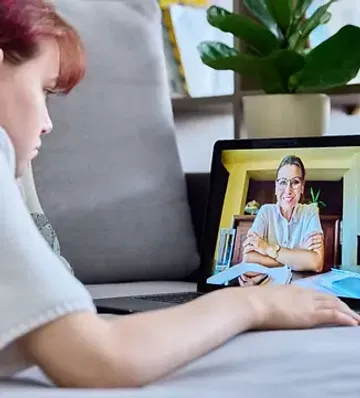
Recovery shouldn't be an additional source of stress. We understand that your life is busy, and your energy might be limited. This is why we provide specialist eating disorder treatment online, allowing you to access a multidisciplinary team: including psychologists, dietitians, and occupational therapists: from the comfort and safety of your own home.
Our approach is heterogeneous, meaning we recognize that every person’s path is different. We don't demand immediate changes or behavioral compliance. Instead, we start with understanding. We look at how your eating patterns might be serving a purpose right now, and then we collaboratively explore "gentle next steps" that feel manageable for you.
A Gentle Invitation
This National Women’s Health Week, we invite you to stop fighting against your body and start curious, compassionate inquiry instead. You don't have to have it all figured out to start the conversation.
Whether you are looking for expert assessment for a specific diagnosis or you just know that your relationship with food feels "heavy," we are here to help you unpack it.
Recovery isn't about reaching a destination of "perfect" health; it’s about reclaiming the mental space that food and body concerns currently occupy, so you can spend that energy on the things that actually matter to you.
If you feel ready to explore what support might look like, we invite you to learn more about our clinicians or get in touch for an initial, low-pressure chat. Your autonomy is always the priority.