Beyond the Rainbow: Our Year-Round Commitment to LGBTQ+ Inclusive Care
As the flags are lowered and the colorful displays of June begin to fade, it is natural to reflect on what remains once the "celebration" ends. For many in the LGBTQ+ community, especially those also navigating the complexities of neurodivergence, the end of Pride Month can feel like a quiet withdrawal of visibility.
At The Eating Disorders Clinic, we believe that inclusive care isn't a seasonal campaign; it is a clinical necessity. When you are looking for private eating disorder treatment, you aren't just looking for a clinician who knows about food: you are looking for a space where your whole self is safe.
In this post, we explore why a dedicated, year-round commitment to LGBTQ+ affirming and neurodivergent eating disorder care is the only way to provide truly effective support.
The Hidden Intersection: LGBTQ+ Identity and Neurodivergence
For many of our clients, identity and neurobiology are deeply intertwined. Statistics show that LGBTQ+ individuals are significantly more likely to experience an eating disorder than their cisgender, heterosexual peers. Research suggests that nearly 9% of LGBTQ+ youth have received a diagnosis, while an additional 29% suspect they are struggling with disordered eating.
When we layer neurodivergence onto this: such as being Autistic or having ADHD: the risk factors compound. We often see a heterogeneous (diverse) mix of challenges, where sensory sensitivities and executive function difficulties overlap with the "minority stress" of navigating a world that wasn't built for your identity.
Minority Stress: The chronic stress faced by members of stigmatized groups, which can lead to using disordered eating as a way to "cope" or regain a sense of control.
Gender Dysphoria: For trans and non-binary individuals, restricting or bingeing can sometimes be a way to manage the distress related to body characteristics.
The Sensory Component: Neurodivergent people may find that certain textures or smells are overwhelming, leading to a restricted range of foods (often seen in ARFID) that is then misdiagnosed as "typical" anorexia.
Why "Standard" Models Can Be a Mismatch
Traditional eating disorder treatment models have often been manualised: meaning they follow a rigid, step-by-step protocol designed for a "typical" patient. Historically, these models have relied on a gender binary and neurotypical assumptions.
If a program assumes you are motivated by a "thin ideal" but your restriction is actually a response to sensory overload or gender dysphoria, the treatment will feel like a mismatch. This isn't your failure; it’s a failure of the model.

We move away from these rigid boxes by using a formulation-based approach. This means we take the time to understand the why behind your behaviors before we ever suggest the how of change. We look at your history, your sensory profile, and your identity to build a roadmap that actually fits your life.
Moving Beyond "Compliance" to "Safety"
In many clinical settings, the focus is on "compliance": doing what the doctor says. At our clinic, we shift that focus to internal psychological safety.
For a neurodivergent or LGBTQ+ person, the world often feels unsafe. Your eating patterns might be the only way you’ve found to feel regulated. We don’t see these behaviors as "bad"; we see them as strategies that are no longer serving you.
Our Approach to Neurodivergent-Informed Care
When we provide neurodivergent eating disorder care, we make active adjustments to ensure you aren't fighting your own brain to get better:
Sensory-Informed Nutrition: Our dietitians don't force "fear foods" just for the sake of it. We work with your sensory preferences to find a way of eating that provides nourishment without causing distress.
Concrete Communication: We avoid abstract metaphors and "therapy-speak." We use clear, declarative language to reduce cognitive load.
Executive Function Support: ADHD can make following a meal plan feel impossible. We build in practical, low-energy tools to help you manage the logistics of eating.
The Comfort of a Safe Space: Why We Work Online
One of the biggest barriers for marginalized groups is the physical environment of a clinic. Traditional hospitals or offices can be loud, bright, and filled with "binary" spaces (like gendered waiting rooms or bathrooms) that cause unnecessary anxiety.
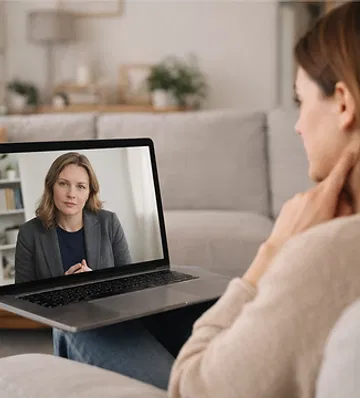
Our decision to be an online-only clinic was a conscious clinical choice. By meeting you in your own home: your safe space: we remove the "sensory tax" of travel and unfamiliar environments.
For someone who is trans or non-binary, or someone who is Autistic, being able to control your lighting, your seat, and your surroundings means you can spend your energy on the actual therapy, rather than just "getting through" the appointment.
Private Eating Disorder Treatment: Timely and Tailored
When you are struggling, waiting months for an assessment is not just frustrating; it’s dangerous. Private eating disorder treatment allows for a faster response. At The Eating Disorders Clinic, our multidisciplinary team of psychologists, dietitians, and occupational therapists works collaboratively to provide a wrap-around experience.
We aren't here to fit you into a pre-existing program. We are here to create a program around you. This includes:
Compassionate Authority: We bring clinical expertise without the "power over" dynamic.
Affirming Language: We use your chosen name and pronouns as a baseline, not an afterthought.
Validation: We acknowledge the impact of systemic transphobia, homophobia, and ableism on your mental health.

A Gentle Next Step
Recovery doesn't have to be a battle of willpower. It starts with understanding. If you have felt overlooked by standard healthcare or if you’ve been told your "case is too complex," we want you to know that you are seen.
Whether you are looking for an ARFID assessment, support for Binge Eating Disorder, or are navigating the intersection of ADHD and restrictive eating, we are here to partner with you.
How to begin at your own pace:
Explore: Read more about our neurodiversity-informed approach.
Understand: Learn about why standard treatment doesn't always work.
Connect: When you feel ready, you can book a free introductory call with our team.
There is no pressure to commit immediately. This is about gathering information and seeing if our approach feels like the right fit for your unique journey.