Mental Health Month Reflection: What Actions Will You Carry Forward?
As we reach the final days of May, the transition from Mental Health Month into the rest of the year offers a unique moment for pause. This year, the global theme of "More Good Days, Together" has invited us to look beyond the clinical definitions of "wellness" and instead explore what a truly supportive, sustainable life looks like for each of us.
At The Eating Disorders Clinic, we know that for those navigating the complexities of an eating disorder, neurodivergence, or the intersection of both, "action" often feels like a heavy word. It can sound like a demand for immediate change or a requirement for superhuman willpower.
However, we believe that the most powerful actions are often the quietest ones: the decision to seek understanding before intervention, the commitment to honoring your sensory needs, and the bravery to acknowledge that your current coping mechanisms: while they may feel problematic now: were once your way of staying safe.
As we reflect on this month, we want to help you filter through the noise and decide which gentle shifts you want to carry forward.
Moving Beyond Willpower to Formulation
One of the most common myths we encounter in our online clinic is the idea that recovery is a battle of willpower. If you’ve found yourself struggling with behaviors that don't fit into a standard diagnostic box, you might feel like you are failing at "getting better."
We prefer to look at this through a formulation-based lens. A clinical formulation is essentially a map of why things are happening. It takes into account your history, your biology, your environment, and your unique neurodivergence. When we understand that a behavior like binge eating might be a "dopamine quest" for an ADHD brain, or that restrictive eating might be a response to sensory overwhelm in an autistic person, the shame begins to dissolve.
Action to carry forward: Replace "Why can't I stop doing this?" with "What is this behavior trying to do for me right now?"

Defining Your "More Good Days"
The theme "More Good Days, Together" reminds us that "good" is entirely subjective. For many of our clients, a "good day" isn't about achieving a perfect relationship with food; it’s about having the cognitive energy to engage with their hobbies, or feeling safe enough in their body to attend a social event.
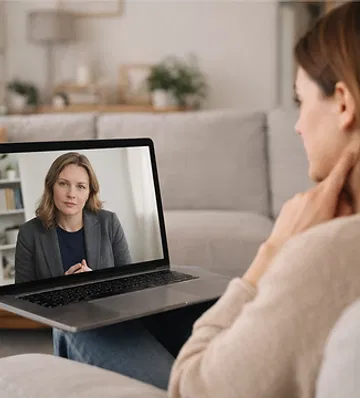
For those with sensory sensitivities, a good day might involve proactively managing their environment to reduce the "sensory tax" of daily life. This is why our clinic operates entirely online. We’ve found that removing the stress of travelling to a clinical setting: the bright lights, the unfamiliar smells, the social pressure of a waiting room: allows for much deeper, more effective therapeutic work.
Action to carry forward: Identify one sensory "drain" in your daily routine and give yourself permission to modify it. Whether it's wearing noise-canceling headphones while cooking or choosing clothes that don't itch, these are valid acts of mental health support.
The Power of Data: Taking a Disordered Eating Test
Sometimes, the biggest barrier to action is the feeling that you aren't "unwell enough" to deserve help. You might feel that because your weight hasn't dropped below a certain point, or because your behaviors are heterogeneous (varied and hard to categorize), your struggle doesn't count.
In clinical reality, the severity of an eating disorder is measured by its impact on your life and your psychological distress, not just a number on a scale. If you are stuck in a cycle of questioning whether your relationship with food is "normal," gathering objective data can be an empowering first step.
Using a disordered eating test or a professional screening tool isn't about looking for a scary label. It’s about externalizing the problem. It allows you to say, "Here is the evidence that I am struggling, and I deserve support." We offer expert assessments for anorexia, bulimia, Binge Eating Disorder, and ARFID, all designed to see the person behind the symptoms.
Action to carry forward: Use a screening tool as a way to validate your experience to yourself.
Collaborative Care: You Don’t Have to Be the Expert
Many of our clients come to us after years of trying to "fix" themselves. They’ve read every book, tried every meal plan, and followed every self-help influencer. The problem is that recovery is rarely a solo journey.
Our approach at The Eating Disorders Clinic is rooted in a multidisciplinary model. This means we don't just look at what you’re eating; we look at how your brain works, how your body processes sensory input, and how your past experiences have shaped your present. Our team of clinicians: including psychologists, dietitians, and occupational therapists: work together to create a plan that fits your life, rather than forcing you to fit into a rigid treatment model.
This collaborative approach is particularly vital for those with complex needs, such as ADHD and eating disorders or those who identify as neurodivergent. We don't see these as separate issues to be treated in isolation; they are deeply interconnected parts of who you are.
Action to carry forward: Explore the idea of "outsourcing" some of the mental load of recovery. You don't have to be your own therapist, dietitian, and case manager all at once.

Looking Ahead: Building a Sustainable Future
As Mental Health Month draws to a close, the goal isn't to have "solved" your mental health. The goal is to have a clearer understanding of the tools and supports that make your life feel more manageable.
Recovery isn't a linear path, and there will be days that don't feel "good." But by carrying forward a neurodiversity-informed perspective, a commitment to sensory safety, and a willingness to seek professional, compassionate care, you are building a foundation for something lasting.
We are here to support that journey. Whether you are looking for a comprehensive ADHD assessment, specialist support for ARFID, or a compassionate space to explore other eating disorders, our team is ready to walk alongside you.
A Gentle Next Step
If this reflection has resonated with you, perhaps your action for today is simply to learn more. You don't need to commit to a long-term treatment plan right this second. You might choose to:
Browse our blog for more neuro-inclusive resources.
Read about our formulation-led approach to care.
Reach out to us for a confidential enquiry to see how we might be able to help.
Remember: you deserve "more good days," and you don't have to find them alone.