
Teamwork Makes the Dream Work: Why a Multidisciplinary Approach is Key to Recovery

On May 12th, we join the global community in celebrating International Nurses Day. The theme for 2026, "Our Nurses. Our Future. Empowered Nurses Save Lives," resonates deeply with us here at The Eating Disorders Clinic.
While the day traditionally highlights the tireless work of nursing staff in hospitals, it also offers a moment to reflect on a fundamental truth in specialist healthcare: no one should have to navigate the path to recovery alone. In fact, when it comes to the complex, overlapping nature of eating disorders, disordered eating, and neurodivergence, a "lone wolf" approach rarely provides the safety or the stability required for long-term change.
Recovery isn't just about food, and it isn't just about "willpower." It’s about the intricate intersection of your physical health, your psychological safety, your sensory needs, and your daily environment. This is why we champion a multidisciplinary approach. By bringing together diverse expertise: from nurses and dietitians to psychologists and occupational therapists: we can create a "net" that is strong enough to hold the weight of your experience.
The Heart of the Team: Why Collaboration Works
Eating disorders are heterogeneous. This means they look different for everyone. For one person, a struggle with food might be deeply rooted in trauma or a co-occurring condition like depression. For another, it might be driven by the sensory sensitivities associated with autism or the executive functioning challenges of ADHD.
When you seek private eating disorder treatment, you aren't just looking for a therapist; you are looking for a team that talks to each other. In many rigid, traditional models, you might see a dietitian in one building and a therapist in another, with neither professional ever exchanging a word. This often leads to conflicting advice, where your nutritional goals might inadvertently clash with your psychological capacity.
A collaborative approach works better because it is formulation-based. Instead of fitting you into a pre-packaged, "manualised" box, we look at the whole picture. We ask: What is this behavior doing for you right now? and How can we safely bridge the gap between where you are and where you want to be?
Empowered Nurses: The Bridge to Safety
In the context of eating disorders, nurses often serve as the "emotional glue" of the clinical team. They are often the first point of contact and the primary advocates for a person's physical and emotional safety.
Nurses in our field do more than monitor vitals. They are listeners and partners in recovery. They understand that a "setback" isn't a failure of character; it is simply a piece of data that tells us the current plan needs adjusting. On International Nurses Day, we celebrate their ability to provide a calm, steady presence in moments of crisis, helping to regulate the nervous system so that the deeper work of therapy can actually take place.

The Pillars of Multidisciplinary Support
To truly support someone with complex needs, we believe the team must be diverse in its skills. Here is how each role contributes to the "dream work" of recovery:
1. Specialist Dietitians: Beyond the Meal Plan
A dietitian’s role in our clinic is far removed from the "food police" stereotype. Our dietitians are neurodiversity-informed. They understand that for many of our clients: particularly those with ARFID (Avoidant/Restrictive Food Intake Disorder): the challenge isn't about body image, but about sensory processing or a lack of interest in eating.
They work collaboratively to:
Identify sensory safe foods.
Manage the physical consequences of disordered eating without using shame.
Help you reconnect with internal hunger and fullness cues at a pace that feels safe.
2. Psychologists: Understanding the "Why"
While the dietitian focuses on the "what" and the "how," our psychologists dive into the "why." Whether you are struggling with anorexia, bulimia, or binge eating disorder, there is usually an underlying psychological function to the behavior.
Our psychological support is integrated with other therapies to address:
Trauma and Emotional Regulation: Helping you find safer ways to cope with overwhelming feelings.
Co-occurring Challenges: Addressing depression, anxiety, or personality disorders that may be fueling the eating issue.
Neurodivergence: We often provide comprehensive ADHD assessments because understanding your brain type is often the missing piece of the recovery puzzle.
3. Occupational Therapists (OTs): The Art of Daily Living
OTs are often the unsung heroes of private eating disorder treatment. They focus on "functional" recovery. If you are too overwhelmed to grocery shop, or if your sensory environment at home is making it impossible to eat, an OT helps you modify your environment and routines. They bridge the gap between the "talking" therapy and the "doing" of everyday life.
Recovery as a "Mismatch," Not a Flaw
One of the most damaging aspects of traditional treatment is the idea that if a patient doesn't get better, they are "unmotivated" or "difficult." We reject that narrative entirely.
When treatment doesn't work, we see it as a mismatch.
Perhaps the environment was too sensory-overwhelming.
Perhaps the therapy was too focused on external behavior and didn't account for the person's autistic profile.
Perhaps the team wasn't communicating, leaving the individual feeling fragmented and unheard.
A multidisciplinary team allows us to pivot. If the "standard" way isn't working, we have the collective brainpower to try a different angle. We don't ask you to change your brain to fit our model; we change our model to fit your brain.
The Power of the Online Clinic
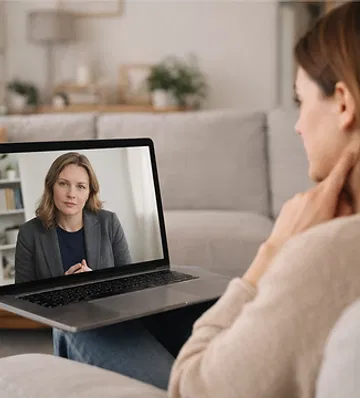
You might wonder how a "team" can work together effectively through an online clinic. The truth is, telehealth often enhances the multidisciplinary approach. Because we aren't limited by geography, we can hand-pick the very best clinicians for your specific needs: whether that’s a dietitian who specializes in ADHD or a psychologist who is an expert in trauma.
Digital collaboration allows our team to hold regular "case formulations" where we discuss your progress (with your consent and involvement) to ensure everyone is pulling in the same direction. It also allows you to receive this high-level, coordinated care from the comfort of your own safe space, reducing the sensory drain of traveling to a physical clinic.

A Gentle Next Step
Recovery is a marathon, not a sprint, and it certainly isn't a solo race. Whether you are an adult looking for support, or a parent seeking help for your child, the most important first step is understanding before intervention.
You don't need to have all the answers right now. You don't even need to be "100% sure" that you want to change everything today. Sometimes, the most empowering thing you can do is simply gather information and see what a collaborative, compassionate team looks like.
If you are feeling overwhelmed by the complexity of what you’re going through, remember that you don't have to carry it all. Our multidisciplinary team is here to share that load with you.
Your autonomy is the priority. We invite you to explore our services at your own pace. If you're ready to see how a tailored, team-based approach could work for you, we’re here to listen.